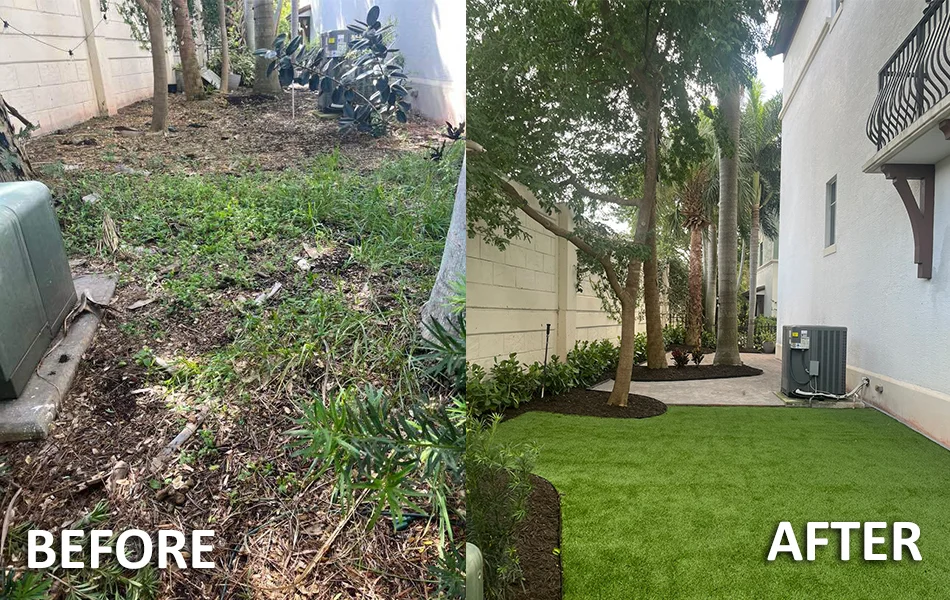
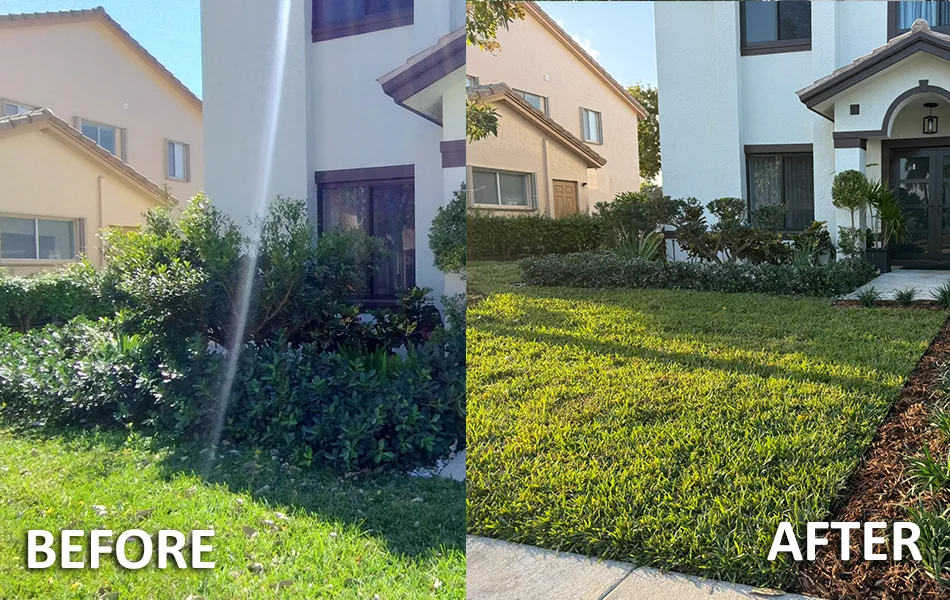
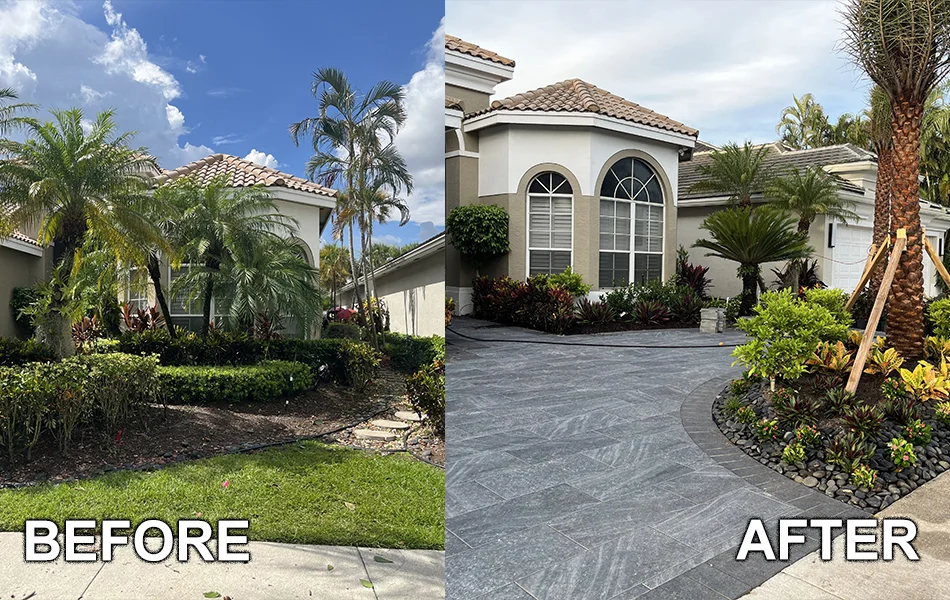
Turf is the first thing residents, tenants and board members judge a property by. Scalped strips along the curb, ragged edges at the walkways and clippings blown onto the pool deck all read as neglect, even when the crew showed up on schedule. On a large common area, mowing at the wrong height for 1 summer can thin St. Augustine enough that weeds take over by fall.
Green Image provides commercial lawn care for HOAs, condominium associations and commercial properties across Palm Beach, Broward and Miami-Dade. Our crews cut each grass type at its proper height, adjust frequency by season and document every visit with photos so your manager can see the result.
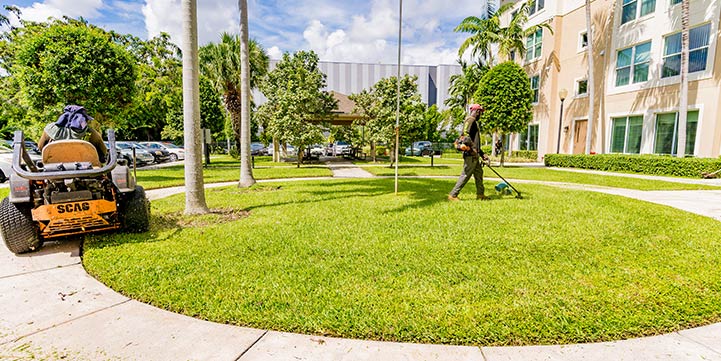
What happens on every commercial lawn care visit
Mowing and edging for commercial properties is only clean when every step is done in the right order:
- Pickup: litter and debris cleared before mowers run, so nothing gets shredded across the turf.
- Mowing: cut at the set height with sharp blades, alternating direction to avoid ruts and grain.
- Edging: hard edges along walks, curbs and drives, plus bed and tree ring edges.
- String trimming: around signs, fences, utility boxes, light poles and lake bank tops where mowers cannot reach.
- Blowing: clippings cleared from walks, parking areas, entrances and pool decks, not into beds or storm drains.
- Photos: the crew documents the finished work and flags anything that needs attention next.
The turf types we cut most often
- St. Augustine: the most common turf on South Florida properties. It is kept tall, typically 3.5 to 4 inches, which shades out weeds and holds up better against drought and chinch bugs. St. Augustine turf care is mostly about height, water and watching for chinch bug damage in the hot, dry stretches.
- Bahia: common on retention areas, roadside strips and large open areas because it tolerates drought and low fertility. It sends up tall seed heads in summer, so it needs steady mowing to stay presentable.
- Zoysia: dense and fine textured, often used at entrances and amenity areas. It is cut lower than St. Augustine and needs sharp blades to avoid a torn, brown finish.
Many properties have all 3. The crew sets deck height by area, not 1 height for the whole site.
How height and frequency shift through the year
During the rainy season, roughly June through October, turf grows fast and HOA lawn care runs weekly. The rule is to remove no more than 1/3 of the leaf blade per cut. Skipping a week in August means either scalping the turf to catch up or leaving it shaggy.
During the dry season, growth slows and some areas can move to a longer interval. Height stays up, because taller turf holds moisture better while the property relies on irrigation. That is when an irrigation audit pays off: dry spots in winter are almost always coverage or run time problems, not mowing problems.
For properties where daytime or early morning mowing noise is a problem, robotic mowing can handle open turf between crew visits.
When to call about turf problems
- Yellow or straw colored patches that spread outward in sunny areas, often a sign of chinch bugs in St. Augustine.
- Thinning turf under trees where the canopy has grown in and shade has taken over.
- Weeds moving into turf faster than the crew can control them, which points to a fertilization and weed control gap.
- Bare areas after construction, flooding or vehicle damage that need sod installation rather than waiting for recovery.
Get a lawn care proposal
An account manager will walk your turf areas with you, identify the grass types and problem spots, and send a written assessment with photos within 72 hours. Request a free quote or call (561) 309-9603.